

What Are Follicles in Ovary
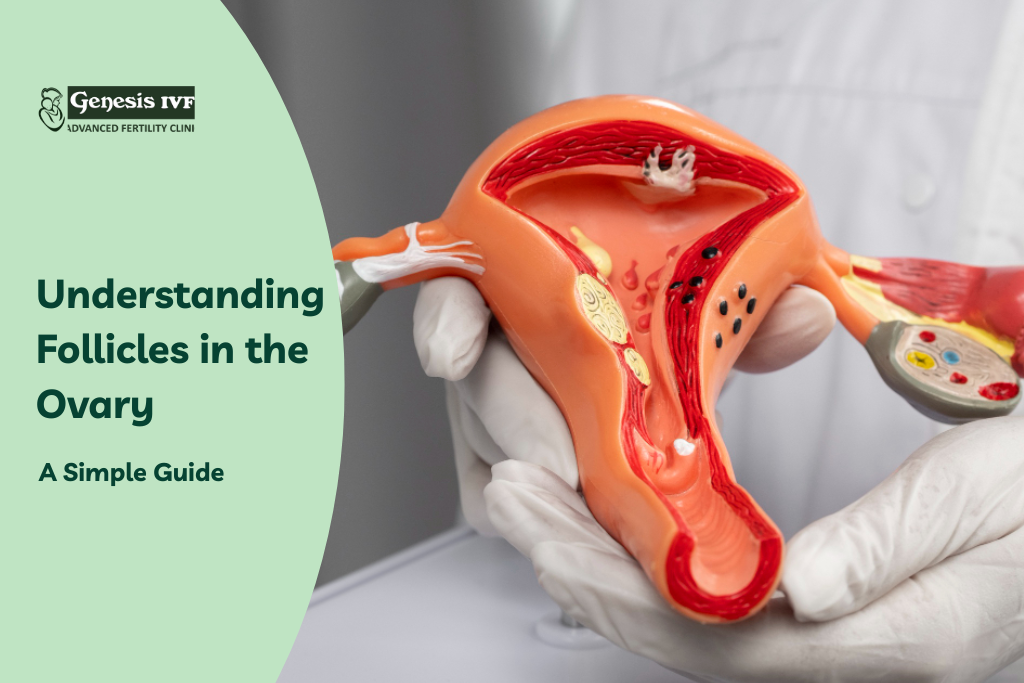
Inside every ovary, there are thousands of tiny sacs called ovarian follicles. Each follicle contains an immature egg called an oocyte. When a woman reaches puberty, these follicles begin to grow every month as part of the menstrual cycle. Usually, one follicle becomes dominant, matures and releases an egg. This process is known as ovulation.
At Genesis IVF Chennai, follicle development is carefully evaluated because follicles are a key indicator of a woman’s reproductive health. They help assess natural fertility, egg quantity and egg quality. They also determine how well a woman may respond to fertility treatments such as IUI and IVF. In addition, follicles support estrogen production, which plays an important role in overall hormonal balance and successful conception.
What Is a Normal Follicle Count
A fertility specialist measures follicle count through a transvaginal ultrasound, usually done on the second or third day of the menstrual cycle. This is known as the Antral Follicle Count or AFC.
Follicle count changes with age. Women in their twenties generally have a higher follicle count. The count gradually reduces after the age of thirty and continues to decline further after thirty five. Women above forty tend to have a much lower count. While age influences follicle numbers, the count alone does not define fertility. A woman with lower follicles can still conceive if her egg quality is good.
What Follicle Size Is Needed for Ovulation
Follicles grow in size during each cycle. In the early phase, they measure between two to ten millimeters. As they move toward maturity, they reach eleven to fifteen millimeters. A follicle is considered ready to ovulate when it measures between eighteen to twenty two millimeters. Follicles that grow beyond twenty four millimeters may contain an egg that is past its optimal maturity, which can reduce the chances of fertilization.
Do More Follicles Mean Better Fertility
Having more follicles does not always mean better fertility. Women with Polycystic Ovary Syndrome or PCOS may have many small follicles visible in scans. These follicles do not mature properly, which affects ovulation. In such cases, the egg is not released regularly. Women with PCOS often experience irregular periods, acne, weight gain and hormonal imbalance. Even though the ovary contains many follicles, they do not develop well enough to support natural ovulation.
How Doctors Check Follicles
Doctors evaluate follicle health and egg reserve using different methods.
- Transvaginal Ultrasound
This helps assess follicle count and size. It is used for routine evaluation and during treatment cycles. - AMH Test
Anti-Müllerian Hormone or AMH shows how many follicles are available. Higher AMH values usually indicate more follicles. Lower AMH indicates fewer follicles. - Hormonal Evaluation
Hormones such as FSH, LH, estrogen and progesterone influence how follicles grow and when ovulation occurs. - Follicular Monitoring
During treatments like IUI and IVF, women undergo multiple scans to track follicle growth and decide the best timing for ovulation or egg retrieval.
Follicles and IVF Treatment
In an IVF cycle, medication is given to stimulate the ovaries so that multiple follicles grow at the same time. This helps collect more eggs during egg retrieval. A good response is generally seen when several healthy follicles develop. Monitoring follicle size helps the fertility specialist decide when to collect the eggs, adjust treatment dosage and estimate embryo quality.
Can Women With Low Follicle Count Conceive
Yes. A low follicle count does not automatically prevent pregnancy. Egg quality is often more important than egg quantity. Many women with low ovarian reserve conceive naturally or through fertility treatment. Options such as Mild Stimulation IVF, ICSI, Embryo Freezing and Donor Egg IVF support women with low follicle count when required. Treatment plans are personalized based on age, hormone levels and egg quality.
When Should You See a Fertility Specialist
A woman should consult a fertility specialist if she faces difficulty conceiving for six months to one year, has irregular or absent periods, suspects PCOS, has crossed thirty two years of age and finds it harder to conceive or has experienced recurrent miscarriages.
Common FAQs
- How many follicles does a woman lose each month
Around one thousand follicles die naturally every month. Usually, only one grows enough to ovulate. - Is five or six follicles enough for pregnancy
Yes. One good quality egg can result in pregnancy. - What is the ideal follicle size for IUI
A follicle between eighteen and twenty two millimeters is ideal for ovulation trigger in IUI cycles. - Does stress affect follicles
Yes. Stress can disturb hormone levels and disrupt ovulation. - Can lifestyle improve follicle quality
Yes. Proper sleep, balanced food habits, maintaining healthy weight, taking omega three fatty acids and reducing smoking or alcohol can help improve egg quality and overall fertility.