



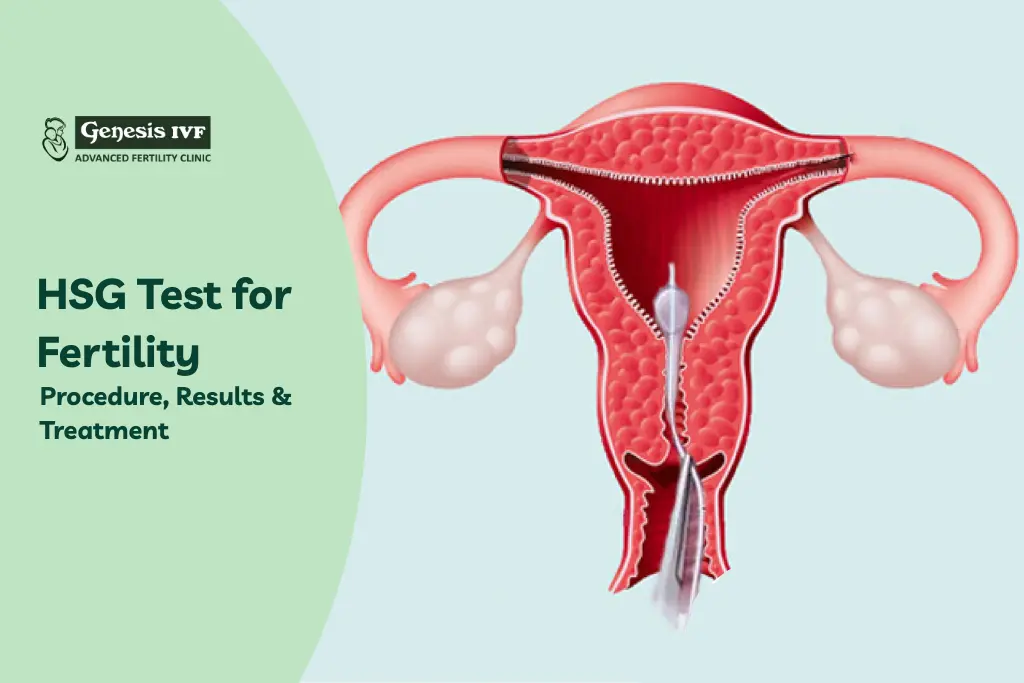
Infertility affects millions of women worldwide, and many are unable to conceive without knowing the biological reason behind it. One of the most reliable and commonly recommended diagnostic tools for female infertility is the Hysterosalpingography HSG Test for Fertility.
At Genesis IVF Chennai, this test is performed with advanced imaging methods to accurately assess the health of the uterus and fallopian tubes, helping couples reach parenthood faster.
What Is an HSG Test?
The HSG test is a special fertility X-ray where a contrast dye is passed through the cervix into the uterus. As the dye travels through the uterus and fallopian tubes, doctors can clearly see:
- Whether the tubes are open or blocked
- Whether the uterus has abnormalities
In Simple Terms, the HSG Test Checks:
- If sperm and egg can meet
- If the uterus can support pregnancy
Who Should Take an HSG Test?
Doctors at Genesis IVF usually recommend an HSG if:
- You have been trying to conceive for 6 to 12 months without success
- You have experienced multiple miscarriages
- Your menstrual cycle appears normal but conception is not happening
- You are planning to undergo IUI or IVF treatment
- You might have fibroids, polyps, or tubal blockage
- You have symptoms or history suggesting pelvic infection or endometriosis
Why Is the HSG Test Important for Fertility?
A large percentage of infertility cases in women are due to problems inside the uterus or fallopian tubes. If a tube is blocked, sperm cannot reach the egg. If the uterus has abnormalities, implantation may fail or miscarriage may occur.
The HSG test helps identify:
- Blocked or damaged fallopian tubes
- Uterine fibroids or polyps
- Adhesions (scar tissue)
- Abnormal uterus shape
- Reasons for repeated miscarriage
Without this test, treatment decisions can be unclear or delayed. With it, doctors can design the fastest and most effective fertility plan based on accurate diagnosis.
How the HSG Test Is Performed at Genesis IVF
The procedure is usually done between Day 7 and Day 10 of your menstrual cycle, when the uterus lining is thin, and pregnancy has not yet occurred.
The process includes:
- A thin tube is gently inserted through the cervix
- Contrast dye is slowly injected into the uterus
- A live X-ray follows the movement of the dye
- Real-time images show whether the tubes are open
- The results are explained immediately after the test
The entire procedure takes 15 to 20 minutes, and you can return home the same day.
Does the HSG Test Hurt?
Some women experience mild menstrual-like cramps for a few minutes during the dye insertion. This sensation is temporary and considered normal. At Genesis IVF, gentle techniques and pain-reducing measures make the experience as comfortable as possible.
Interestingly, mild cramping during HSG is sometimes a good sign, because it can mean the tubes are opening and the dye is flushing them.
Can the HSG Test Improve Your Chances of Getting Pregnant?
Yes. The HSG test not only diagnoses problems in many women, but it can improve fertility immediately. When the dye passes through the fallopian tubes, it can clear small blockages, helping the egg and sperm meet naturally.
Many women conceive within three months after the test.
Understanding HSG Results
Your fertility path after an HSG depends on what the test reveals. Here’s how doctors at Genesis IVF interpret the results:
- Both tubes open and uterus normal: You may try naturally for a few months or choose timed intercourse or IUI.
- One tube blocked: Pregnancy is still possible naturally or through IUI.
- Both tubes blocked: IVF is the recommended treatment because natural conception becomes impossible.
- Abnormalities within the uterus (fibroids, polyps, adhesions): Corrective procedures such as hysteroscopy or laparoscopy are advised before planning pregnancy.
Every treatment decision after the HSG is personalized depending on your age, history, hormone levels, and duration of infertility.
Why Choose Genesis IVF for HSG Testing?
- Fertility-focused interpretation by experienced specialists
- Advanced X-ray imaging technology
- Same-day consultation and diagnosis
- Comfortable and safe procedure with minimal discomfort
- Precise treatment planning following the test
- 37+ years of trusted fertility care
With accurate diagnosis and timely treatment at Genesis IVF, your fertility journey becomes clearer, faster, and easier.
Frequently Asked Questions
Can I try for pregnancy immediately after the HSG test?
Yes. Many women conceive naturally soon after the test if minor blockages are cleared.
When is the best time to take an HSG test?
It should be done between Day 7 and Day 10 of your menstrual cycle.
Is HSG a safe procedure?
Yes. It is a safe, non-surgical diagnostic test when performed by certified fertility experts.
Will I need rest after the test?
You can resume normal work the same day. Mild spotting or cramps are temporary.
Disclaimer
This article is meant for educational purposes. Always consult experts at Genesis IVF Chennai for personalized medical advice.