

Understanding Ovulation and Your Fertile Days
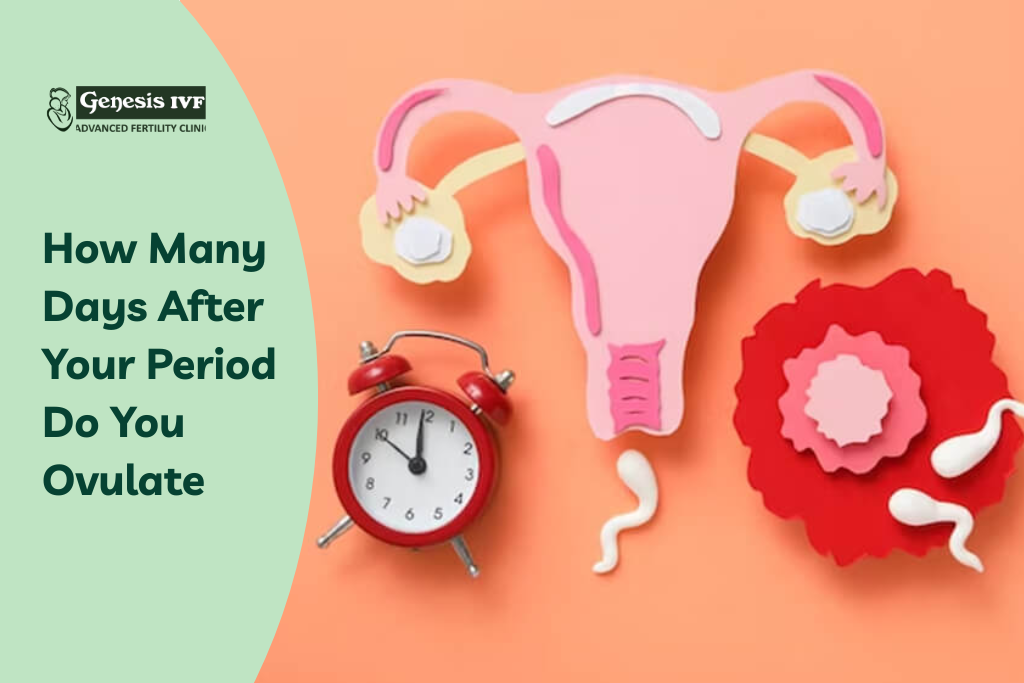
If you are planning to conceive or want to monitor your reproductive health, one of the most common questions is: How many days after my period do I ovulate? Ovulation is the stage in your menstrual cycle when the ovary releases a mature egg. This egg stays alive for only 12 to 24 hours. During this time, if a sperm fertilizes the egg, pregnancy occurs. Although the egg survives for a few hours, sperm can live inside the female reproductive tract for up to five days. This means your fertile days are not limited to the day of ovulation alone.
Many women in Chennai struggle with irregular cycles, PCOS, thyroid disorders and unexplained infertility. In such cases, understanding ovulation is important for natural conception. At Genesis IVF, Chennai, couples receive scientific guidance to increase their chances of pregnancy through proper timing and ovulation tracking.
How Many Days After Your Period Do You Ovulate
Ovulation does not occur a fixed number of days after your period. It depends on your complete cycle length. You typically ovulate 14 days before your next period. This is the most important point to remember.
For example
If your menstrual cycle is 28 days, you may ovulate around day 14
If your cycle is 30 days, ovulation may happen around day 16
If your cycle is 25 days, ovulation may happen around day 11
If your cycle is 21 days, ovulation may happen around day 7
If your cycle is 35 days, ovulation may happen around day 21
Key Conclusion
Ovulation is not based on period days. It is based on the next expected period date. You ovulate around 14 days before your next period. The fertile window starts 4 to 5 days before ovulation.
How to Know If You Are Ovulating
Your body produces hormonal changes that indicate egg release. The most common signs include:
- Stretchy clear cervical mucus similar to raw egg white
- Rise in basal body temperature by 0.3 to 0.5 degrees Celsius after ovulation
- Mild pain on one side of the lower abdomen, also called ovulation pain
- Increased sexual desire near mid cycle
- Slight breast tenderness or heaviness
- Mild bloating or mood changes
These signs can be helpful, but they may not be reliable for women who have PCOS, thyroid disorders, high stress, obesity or irregular cycles. When symptoms are unclear, medical ovulation tracking is recommended, and you can learn more at Genesis IVF Clinic here: Learn more about ovulation tracking.
Best Methods to Track Ovulation
The most reliable methods of tracking ovulation include:
- Ovulation Predictor Kits that detect the LH surge
- Ultrasound follicular monitoring by a fertility specialist
- Hormone blood tests to assess LH, progesterone and estrogen
- Basal body temperature tracking by taking early morning temperature
- Cervical mucus observation to identify peak fertility
Among these, ultrasound scanning and hormone testing provide the highest accuracy. They show exactly when the egg is maturing and when ovulation will occur. At Genesis IVF Clinic, ultrasound monitoring is routinely recommended for women with irregular or unpredictable cycles.
How Irregular Periods Affect Ovulation
Women with irregular menstrual cycles may ovulate late, ovulate early or skip ovulation completely in some cycles. This is common in conditions such as PCOS, endometriosis, thyroid problems, obesity, extreme weight loss, excessive exercise and stress.
Lack of regular ovulation reduces the chances of natural conception even if the fallopian tubes and sperm quality are normal. In such cases, ovulation can be medically induced using medications or hormonal correction. Genesis IVF Clinic offers personalized assessment and treatment to regulate ovulation safely.
Scientific Action Plan to Conceive Faster
To improve your chances of conception naturally, follow the steps below.
- Track ovulation using OPK kits or ultrasound monitoring
- Have intercourse regularly during the fertile window
- Maintain a healthy body weight as per BMI guidelines
- Correct underlying hormonal problems if present
- Avoid smoking, alcohol, excessive screen time and late night sleep
- Manage stress levels through breathing exercises and regular activity
- Seek medical help early if you are over the age of 35
Intercourse Frequency
Couples should have intercourse two to three times between day 11 and day 18 in a 28 to 30 day menstrual cycle. This ensures that sperm are present in the reproductive tract before ovulation occurs.
Diet and Lifestyle Tips
Consume foods rich in zinc, folate, omega fatty acids and lean proteins. Reduce junk foods, colas, caffeine and excess sugars. Sleep seven to eight hours every night and maintain moderate physical exercise.
When Should You Consult a Fertility Specialist
Consult Genesis IVF Clinic if you experience any of the following:
- Irregular or absent menstrual periods
- Severe menstrual pain or abnormal bleeding
- Failed pregnancy attempts for more than 12 months if under 35 years
- Failed attempts for more than six months if above 35 years
- Diagnosed PCOS, endometriosis, thyroid disorders or low sperm count
Early medical intervention prevents complications and increases the chances of natural conception.
Why Choose Genesis IVF Clinic, Chennai
Genesis IVF Clinic offers advanced ovulation tracking, reproductive hormone diagnostics and fertility treatments including IVF, ICSI, IUI, TESA and PGT testing. With more than two decades of experience and ethical treatment practices, Genesis IVF Clinic focuses on individualized plans instead of generalized prescriptions.
Conclusion
Ovulation timing is not determined by the number of days after your period. It depends on your full menstrual cycle length and typically occurs about 14 days before your next expected period. Identifying the fertile window, which begins four to five days before ovulation, increases the possibility of natural conception.
For women with irregular cycles, PCOS, thyroid disorders or unexplained infertility, accurate ovulation tracking through medical methods can make a significant difference. With proper guidance from a fertility specialist, most women can achieve predictable ovulation and improve their chance of pregnancy.
Also Check: Fruits to Avoid During Pregnancy: Expert Guidance by Genesis IVF
Frequently Asked Questions
- Can a woman ovulate immediately after her period
Yes. Women with very short cycles, such as 21 or 22 days, may ovulate within a few days after their period ends. Ovulation depends on the cycle length, not the end of menstruation.
- How many days after my period is the fertile window
Your fertile window begins about four to five days before ovulation and lasts until one day after ovulation. This varies for each woman based on her cycle length.
- Do irregular periods mean I do not ovulate
Not always. Women with irregular periods may still ovulate, but timing becomes unpredictable. Some cycles may also be anovulatory, meaning ovulation does not happen. Medical tracking is recommended.
- Can I get pregnant without tracking ovulation
Yes, but tracking ovulation increases the chances of natural pregnancy, especially for couples trying for more than six months. Accurate timing ensures that sperm and egg meet at the right time.
- Should I see a fertility specialist if I cannot detect ovulation
Yes. If you are unable to track ovulation, have irregular periods, PCOS, thyroid problems or have been trying to conceive unsuccessfully, a fertility specialist can monitor ovulation and guide treatment.